


Vrischikasana also called the Scorpion Pose in the world of Yoga, is an enchanting pose that is a captivating blend of balance, strength, and flexibility. As the name suggests, the practitioner resembles a majestic scorpion poised to strike, appearing to defy gravity. This well-advanced yoga pose invites you to explore the uncharted territories of physical and mental agility while embodying the essence of yogic artistry. Vrischikasana fosters a deep connection between mind and body while demanding exceptional control, making it a mesmerizing addition to your yoga journey.
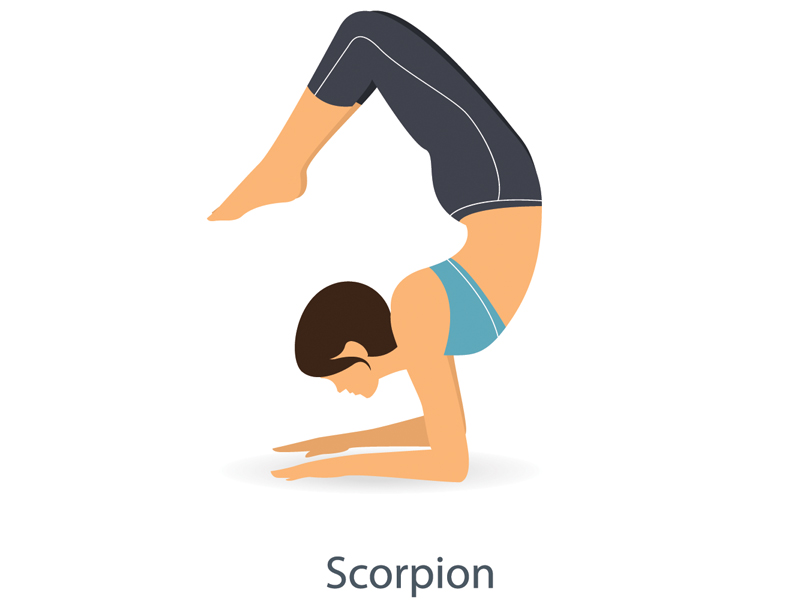
Image Source: Shutterstock
However, remember that though there are several benefits of performing Vrischikasana or the Scorpion pose, it is an advanced-level pose that should be done only after reaching a certain level of core strength. Read on!
What is Vrischikasana?:
Vrischikasana, also called the Scorpion Pose, is an advanced yoga posture where the body curves gracefully, resembling a scorpion with its tail up. In Vrischikasana, the practitioner has legs lifted overhead while balancing on the forearms. The spine arches gracefully while the feet come to rest near the head. Vrischikasana holds significant importance in yoga practice historically and culturally. The Scorpion represents the power to transmute negative energy into positive and poison in Hindu mythology.
The scorpion yoga pose symbolizes the practitioner’s ability to transform negative energy and overcome challenges into spiritual growth. Beyond physical challenges, this asana is also regarded as a pose that awakens the ‘kundalini energy,’ believed to reside in the spine’s base. This pose is a testament to the yogi’s mastery over their physical and mental facilities since it demands immense strength, balance, and flexibility.
Although the pose is challenging, Vrischikasana offers physical benefits like improved strength and flexibility while serving as a powerful tool for self-discovery and spiritual growth.
Benefits of Vrischikasana:
Vrischikasana offers a wide range of physical and mental benefits, which are as follows:
Vrischikasana helps develop core strength, engaging the abdominal muscles. It requires a solid and stable core to maintain balance and lift the legs.
Practising the scorpion pose helps improve overall stability.
This pose stretches the chest, shoulders, and spine while opening up the hip flexors, increasing these area’s stability.
Performing Vrischikasana can help improve arm, shoulder, and upper body strength.
This pose increases blood flow to the brain. It promotes mental alertness by stimulating the nervous system in the inversion aspect.
Vrischikasana encourages deep breathing and mindfulness, helping you reduce stress and anxiety.
This pose enhances your ability to stay focused and present since the Scorpion pose requires intense concentration.
Practising the Vrischikasana also helps boost self-confidence, aids in overcoming fever, and promotes a sense of inner calm.
How to Practice Vrischikasana:
Here are the simple steps that help you practice Vrischikasana or the Scorpion pose efficiently.
Start by coming into a forearm stand. Create a sturdy base for your forehead by keeping your forearms on the mat with shoulder width apart while interlacing your fingers.
Place the crown of your head right between your forearms on the mat while keeping your gaze slightly forward.
Come into an inverted “V” shape by walking your feet closer to your head and lifting your hips.
Slowly bring the leg towards your head by lifting it off the ground. Take support from the other leg on the ground.
Maintain balance and control by engaging your core muscles. If you feel comfortable, you can gradually lift the second leg off the ground.
Work on straightening your legs and lifting them towards the ceiling if you feel confident.
Your body forms a graceful arch with your feet reaching towards the head as you perform Vrischikasana.
Remain in this pose as long as you can while focussing on your deep and even breaths.
Slowly bring your legs to the ground one at a time, returning to the forearm stand.
Finally, rest in a child’s pose or any other comfortable resting position as you come down from the Forearm stand.
Preparing for Vrischikasana:
Scorpion pose, or Vrischikasana, requires strength, balance, and flexibility since it is an advanced yoga posture. Be cautious as you approach this pose, especially if you are a beginner. It is advised to take guidance from an experienced yoga teacher to avoid injuries. However, here are some of the ways you can prepare yourself to perform the Vrischikasana:
Begin with a thorough warm-up practice, focusing on the spine, shoulders, and wrists.
You can start with the Downward-facing dog, and Dolphin pose as preparatory poses to prepare your body for the Scorpion pose.
Safety and Precautions:
Vrischikasana, or the Scorpion pose, is a challenging pose that will take time for anyone to master. Therefore, before attempting a risky pose, practising it safely with a focus on body awareness and alignment is best. Here are some of the safety points and precautions you can keep in mind before you perform this pose:
If you are a beginner, using a wall for support is best to avoid injury.
If you are suffering from neck or shoulder injuries, avoid practising this pose while also ensuring you have the required flexibility and strength to perform this pose.
Keep in mind to progress over time gradually, without forcing anyone into the posture.
You can take guidance from a professional if you are overwhelmed with the steps.
Even in the first few months of pregnancy, pregnant women shouldn’t practice this pose.
Variations of Vrischikasana:
Several variations of the Vrischikasana or the Scorpion pose cater to different levels of practitioners. These variations work on strength, flexibility, and balance while allowing individuals to adapt the pose to their abilities. Here are some of the common Vischikasana variations:
1. Forearm Stand (PinchaMayurasana):
Also referred to as a Forearm stand, this is a basic version of Vrischikasana where the practitioners balance on their forearms with both legs lifted vertically.
2. One-Legged Scorpion (Eka Pada Vrischikasana):
This variation is a good stepping stone to the full pose, which involves lifting one leg overhead while the other remains vertical.
3. Straddle Scorpion (Vrischikasana with Straddle):
This variation has the practitioner open your legs wide apart while in Scorpion Pose, adding a flexibility challenge.
4. Bent-Knee Scorpion:
As the name suggests, in this pose, you can keep your knees bent instead of straightening your legs fully, making the pose more accessible for some practitioners.
5. Wall-Assisted Scorpion:
This Scorpion Pose practised against a wall can help balance and alleviate the fear of falling, which can be very helpful for beginners.
6. Headstand Scorpion (Shirshasana Vrischikasana):
This variation combines the Headstand (Shirshasana) with the Scorpion Pose, bringing your legs overhead while in the Headstand. Excellent core and upper body strength are essential to practice this variation.
7. Vrischikasana in Lotus (Padmasana Vrischikasana):
This variation is ideal for advanced practitioners since it involves entering Scorpion Pose while in Lotus Pose (Padmasana), with your feet crossed on the opposite thighs.
8. Handstand Scorpion:
As the name suggests, this variation requires you to perform Scorpion Pose while in Handstand (Adho Mukha Vrksasana), demanding high strength and control.
Note: Remember to attempt these Vrischikasana variations only if you have the strength, flexibility, and foundation in the basic forearm stand. It is advised to take guidance from an experienced yoga instructor to avoid mishaps.
Vrischikasana, the Scorpion pose, exemplifies the pinnacle of yogic strength and grace. This pose offers a profound journey of self-discovery, though it is challenging and an advanced version. The scorpion pose reminds us that a person’s true potential awaits exploration, lying beyond our perceived boundaries. Remember that the Vrischikasana should be done after you have achieved mid-level experience performing all the preparatory poses. Don’t forget to let us know if you found the article helpful!
FAQs:
1. Can beginners practice Vrischikasana?
Beginners attempting Vrischikasana, an advanced yoga pose, can be risky. It is advised to master basic inversions and seek guidance before fully practising the Scorpion pose at home.
2. What are the common mistakes one should avoid while practising Vrischikasana?
Some of the common mistakes one should avoid while practising the Scorpion pose include:
Don’t collapse the shoulders.
Avoid over-arching the lower back.
Support the weight by using the neck.
3. What are the things to keep in mind to practice The Scorpion pose?
Focus on engaging the core.
Maintain a straight line from head to heels.
You can use your forearms for support.
Prioritize proper alignment.
Avoid rushing into the pose.
Advertisement


Advertisement


Advertisement


